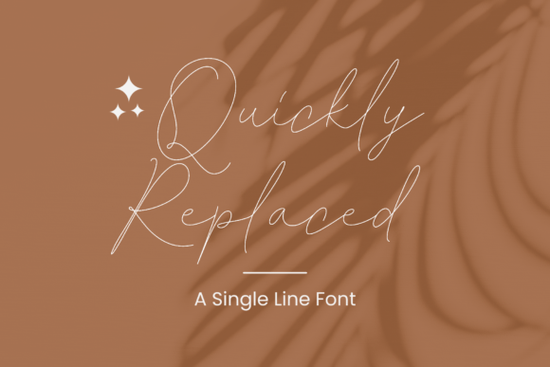
If you’ve been searching for a clean, minimalist font that works beautifully in Cricut Design Space and doesn’t clutter your design, Quickly Replaced Font might be exactly what you need. It’s a single-line script sweet, simple, and surprisingly versatile. Whether you’re personalizing wedding invites, designing product labels, or creating social media graphics, this font keeps things light while still making an impression.
What makes it especially handy is how well it pairs with layered backgrounds or busy patterns. Since it’s drawn as one continuous line, it doesn’t overpower visuals it complements them. That’s why crafters and small business owners often reach for fonts like this when they want text to feel present but not dominant.
Who is this font best suited for?
If you run a print-on-demand shop or make custom vinyl decals, you’ll appreciate how smoothly Quickly Replaced cuts on machines like the Cricut Maker or Silhouette Cameo. No overlapping strokes means fewer cut errors and less weeding time. For designers working on branding projects or packaging mockups, its airy structure helps text breathe even at smaller sizes.
Hobbyists who make greeting cards, planner stickers, or classroom decor also find single-line fonts like this one incredibly practical. You can sketch out phrases quickly without worrying about thick fills or complex kerning. And if you’ve ever tried using traditional script fonts over textured backgrounds, you know how messy that can get. This one? Clean every time.
How does it compare to other single-line fonts?
Not all single-line fonts are created equal. Some feel stiff or overly geometric, while others lose their charm when scaled down. Quickly Replaced strikes a nice balance it’s casual enough to feel friendly but structured enough to stay legible.
If you’ve used Rain Font before, you’ll notice Quickly Replaced has a slightly rounder, more organic flow. It’s less angular than Rathgar Stencil, which gives it a softer presence. Compared to Never Brat, it’s far more restrained perfect if you want elegance without the drama.
And if you’re into playful contrast, try pairing it with something bolder like Golfmind for headlines or Hello AndyAn Duo for decorative accents. Mixing weights and styles like this can add depth to your layouts without needing extra graphics.
Where should you use it?
- Product packaging – Think tea tins, soap labels, boutique candles. The thin line won’t compete with your branding colors or imagery.
- Social media quotes – Overlay it on photos or gradients. It reads clearly even when semi-transparent.
- Wedding stationery – Place cards, menus, thank-you tags. Its simplicity feels intentional, not lazy.
- Craft projects – Iron-on transfers, wood signs, embroidery patterns (yes, some users digitize it for stitching!).
A note for Cricut users
This font was clearly designed with Cricut Design Space in mind. When you upload it, you won’t need to weld or flatten layers to get a clean cut path. Just type, resize, and send to mat. If you’ve struggled with fonts that break apart during cutting or require manual node editing, this one saves time and sanity.
Pro tip: In Design Space, switch to “Write” mode instead of “Cut” if you’re using a pen. The single-line structure means your machine will trace each letter in one smooth motion, no retracing needed.
Is there a learning curve?
Hardly. If you’ve installed any font before, you’re good to go. Unzip the file, install the .OTF or .TTF (both are usually included), restart your design software, and it’ll show up in your font menu. No plugins, no converters.
One thing to keep in mind: because it’s so delicate, avoid using it below 18pt unless you’re printing at high resolution. On low-DPI printers or cheap vinyl, tiny details can disappear. But at readable sizes? It holds up beautifully.
You can check out the full version and licensing options here: Quickly Replaced.
What’s next after downloading?
Don’t just save it to your font folder and forget it. Try these three quick ideas to put it to work:
- Make a sample sheet. Type out A–Z, numbers, and punctuation in different sizes. Print it or save it digitally. Refer back when you need a reminder of how it behaves.
- Pair it with a bold sans-serif. Use Quickly Replaced for subheadings or captions, and something sturdy like Montserrat or Bebas Neue for titles. Instant hierarchy.
- Test it on your most-used material. Cut it on glitter vinyl, print it on kraft paper, stitch it onto linen see where it shines in your workflow.
Fonts like this only become valuable when you actually use them. So open your design tool, pick a project you’ve been putting off, and let the simplicity of Quickly Replaced do the heavy lifting.
Download Now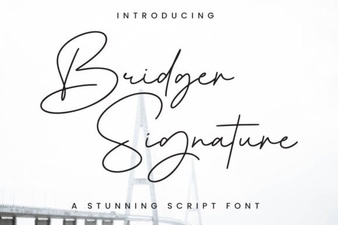 Bridger Signature Font for Elegant Design Projects
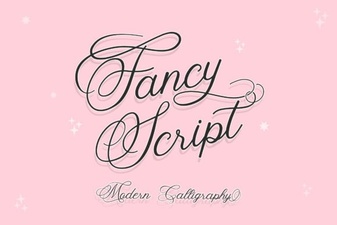 Elegant Fancy Scripts for Your Creative Projects
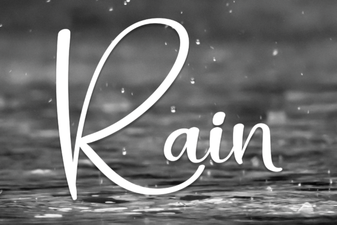 Rain Font Design: Creative Typography Ideas
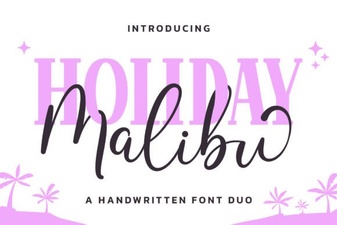 Malibu Holiday Duo Font for Creative Project Designs
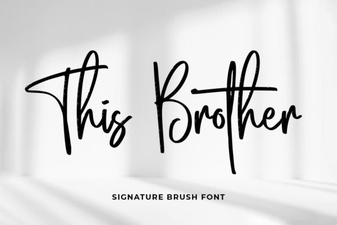 Design Projects Using This Brother Font
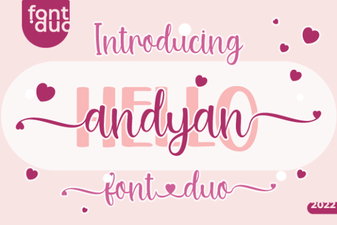 Hello Andyan Duo Font for Design & Typography Projects